
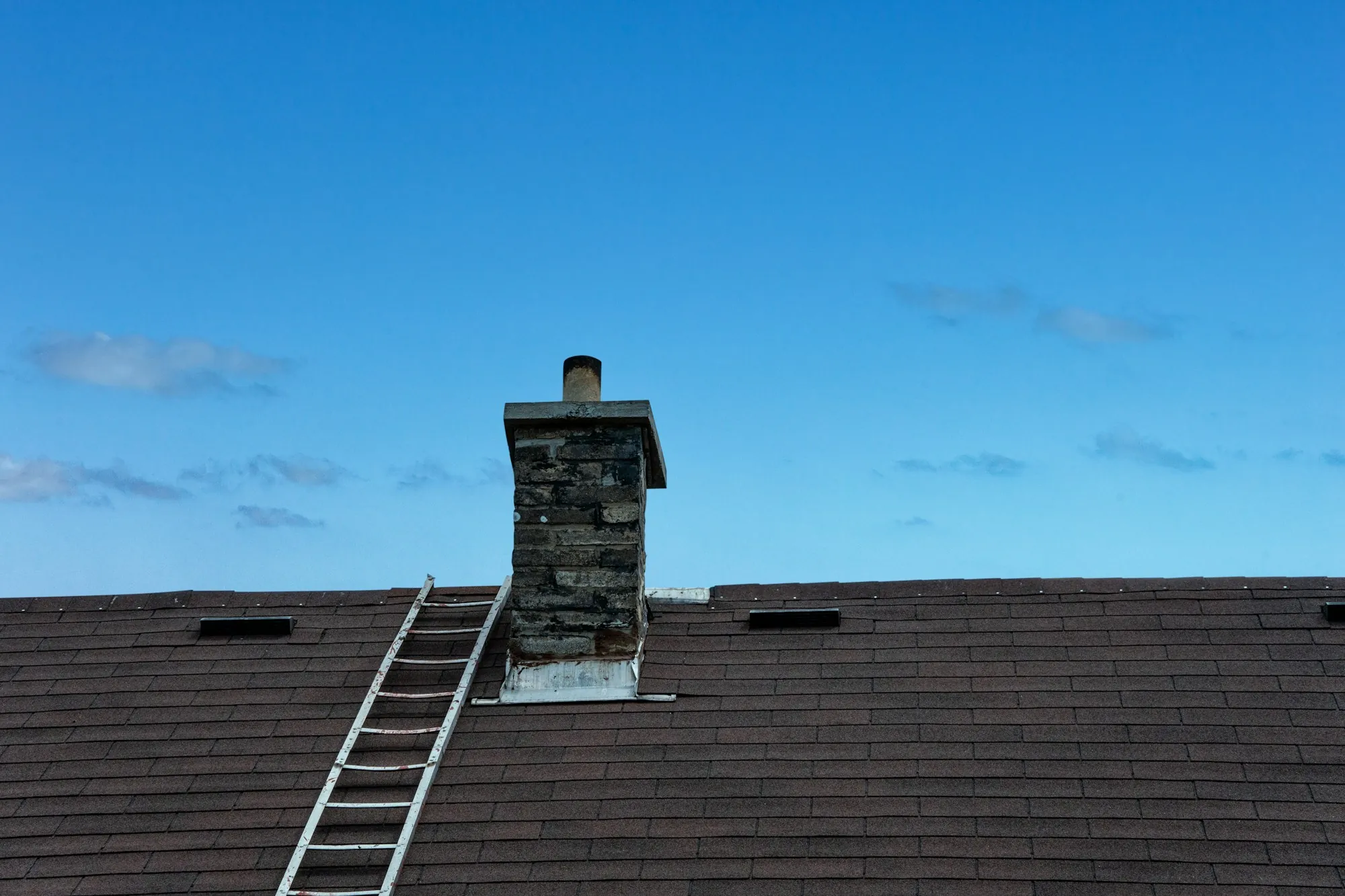
Here’s something many buyers and owners don’t realize: a standard home inspection may never set foot on the roof. The InterNACHI Home Inspection Standards of Practice allow the roof to be inspected from ground level or the eaves, and they say the inspector is not required to walk on any roof surface or predict how long it will last. That’s a reasonable limit for a whole-house inspection. It also means a dedicated roof inspection answers questions a general one leaves open.
So what does a roof inspection check when a roofer does it? Below is the nine-point order we’d expect on a typical Berkeley Lake home, from the shingles down to the attic.
How is a roofer’s inspection different from a home inspection?
A roofer’s inspection goes onto the roof and into the details, while a home inspection usually covers the roof as one item among dozens. Both are useful. They just answer different questions.
| General home inspection | Roofer’s roof inspection | |
|---|---|---|
| Walks the roof | Not required under the InterNACHI standard | Yes, when the pitch and surface are safe |
| Life expectancy | Not required to predict it | Gives a condition read and a likely next step |
| Fastening and install details | Not required to confirm | Checks nails, seals, flashing and edge details |
| Storm damage | Notes what is visible | Separates fresh storm hits from normal wear |
| Result | One section of a large report | Photo log of the roof with priorities |
If you’re buying a home near Lake Berkeley, or your home inspector flagged “further evaluation by a roofer,” this is the next step.
1. What does the inspector look for on the shingles?
The shingle field is checked first, slope by slope, for granule loss, curling, cracking, lifted tabs and impact marks. These are the surface clues that show how a roof is aging and whether a storm left anything behind.
Telling wear from damage is the hard part. The Insurance Institute for Business & Home Safety notes that shingles are made with extra granules that are expected to shed, and that rain can loosen granules too, while hail can displace granules, dent the shingle or breach it. A trained eye looks at the pattern. Wear tends to be even and gradual. Storm marks tend to be scattered and sharp.
2. Why does the metal flashing get so much attention?
Flashing gets close attention because most leaks start where the roof meets something else. Metal at sidewalls, in valleys and along any wall where a second story steps back is checked for gaps, rust, lifted edges and missing sealant.
On a two-story house with several roof planes, that’s a lot of joints. Each one is a seam water can find.
3. Are pipe boots and vents part of the check?
Yes. Every plumbing stack has a rubber or lead collar around it, and those collars crack in the sun over time. Exhaust vents and roof vents are checked for dents, loose fasteners and gaps at the base.
A split pipe boot is a common source of small leaks on roofs of any age. It’s a cheap part, but it lets water drip straight onto the decking.
4. What about the edges and the ridge?
The perimeter of the roof is checked for edge metal, the starter row and the ridge cap. Wind tends to work on edges first, so lifted or missing pieces there are an early warning.
The ridge cap takes direct sun and wind at the highest point of the roof. Cracked or blown-off caps leave the top of the roof exposed.
5. How are gutters and downspouts judged?
Gutters and downspouts are checked for dents, sagging, loose hangers, clogs and where the water lands. Granules piled in the gutter are also a clue about the shingles above.
Berkeley Lake sits in a heavily wooded part of Gwinnett County, and pine needles and oak leaves fill gutters quickly. When water can’t drain, it backs up under the first row of shingles. If your gutters need more than a cleaning, our gutter and downspout work covers sizing, repair and replacement.
6. Does the inspector go into the attic?
A good roof inspection includes the attic whenever there’s safe access. From the inside, an inspector looks for water stains on the decking, damp or matted insulation, rusty nail tips, and pinpoints of daylight where there shouldn’t be any.
The attic often shows a leak before the ceiling does. It’s also where signs of trapped moisture or poor airflow show up, like dark staining on the underside of the decking.
7. Is the roof deck checked for soft spots?
Yes, by feel and by sight. Walking the roof, an inspector notices spongy or uneven areas that suggest the decking underneath has been wet for a while. In the attic, they look for sagging between rafters.
Soft decking matters for any future work. Damaged boards have to be replaced before new shingles go on.
8. Will the inspector check for storm damage?
A roof inspection after hail or high wind looks for damage that lines up with the storm. Soft metals help here. Dents on gutters, downspouts and vent caps show that hail hit the property and roughly how big it was.
The National Roofing Contractors Association advises owners to look at storm damage from the ground and leave the close assessment and repairs to a professional roofer. Spring and summer thunderstorms move through north metro Atlanta every year, so a check after a big one is common sense. If the inspection turns up storm damage, our storm damage repair page explains the next steps.
9. What do you get at the end?
You should get a photo log and a plain list of findings, not just a verbal “looks okay.” Each photo should show where the issue is on the roof. Findings should be sorted by priority: fine for now, keep an eye on it, or fix it.
That list is what you plan around. A small item, like a pipe boot, can become a roof repair. A roof with widespread wear may point toward planning for replacement. Either way, you’re working from what was actually found.
What can a roof inspection not tell you?
A visual roof inspection can’t see what’s sealed under the shingles. The underlayment, the condition of most of the decking and the nailing pattern of the original install stay hidden unless shingles are lifted or removed. An inspector reads the clues around them, like soft spots, stains in the attic and how the surface lies, but some answers only show up during a tear-off.
It also can’t promise how many more seasons a roof has left. Weather, attic conditions and the next storm all play a part. What it can do is give you an honest condition read today, with photos, so you can budget and plan instead of guessing. If someone hands you an exact number of years after a quick look, ask what they based it on.
Roof inspection questions we hear in Berkeley Lake
How long does a roof inspection take? It depends on the size, pitch and number of slopes. A single-story ranch with simple lines goes faster than a steep two-story with valleys and dormers. The attic adds a bit of time but is worth it.
Do I need to be home for the inspection? Not for the outside part, but it helps to be home if the attic is part of the check. Being there also lets you walk through the photos and ask questions on the spot.
Should I get a roof inspection before buying a home? It’s a smart add-on, especially if the home inspector couldn’t walk the roof or flagged anything for a roofer. A roof inspection tells you its condition and what work might be coming, which helps when you’re weighing the purchase.
Can I inspect my own roof? You can look from the ground with binoculars and check the attic with a flashlight. Leave the climbing to a pro, since steep, shaded roofs around the lake can stay slick long after a rain. Our roof inspection service covers the full nine points, and you can see everything Berkeley Lake Roofing offers on the homepage.